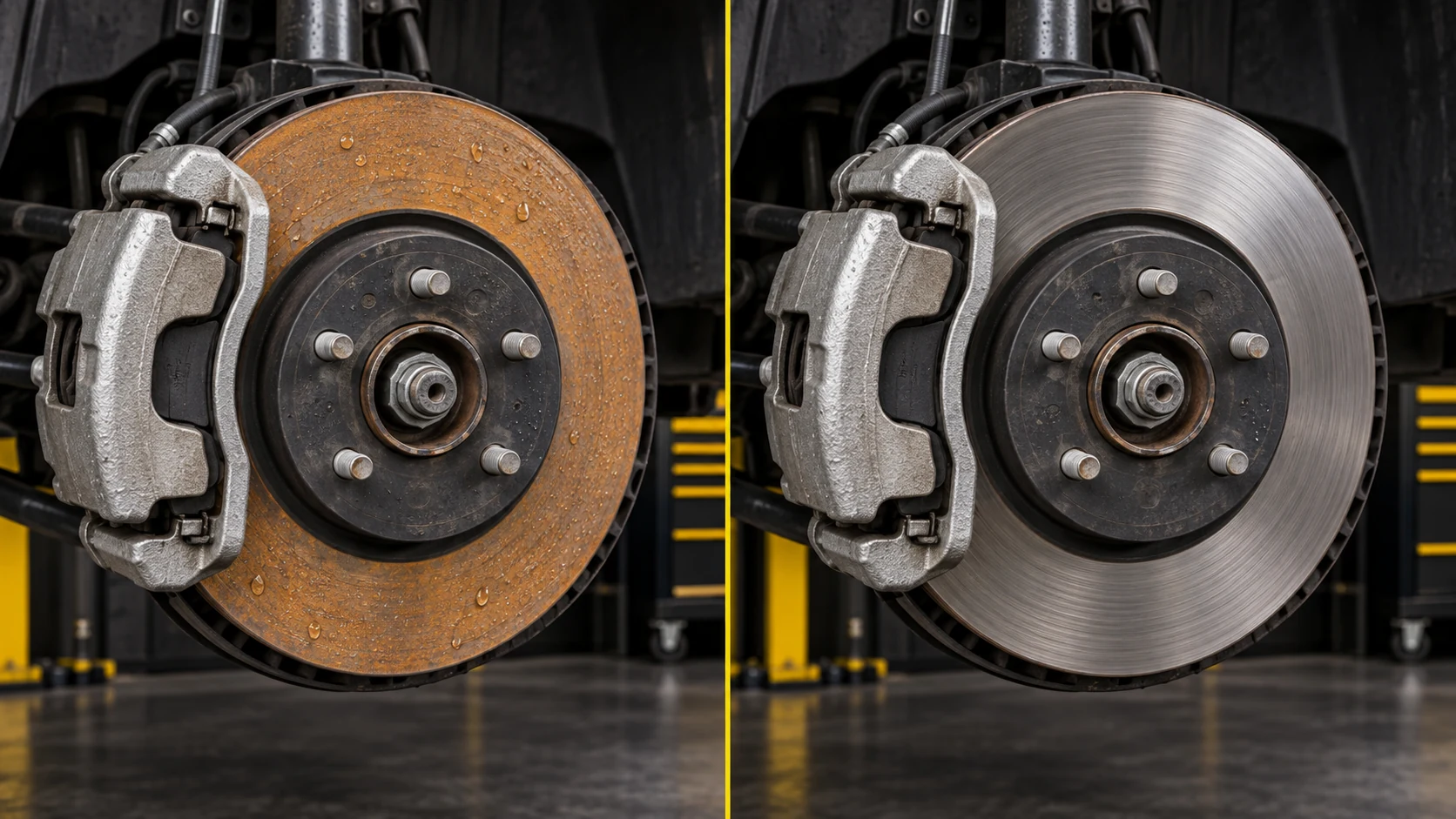
Short answer: if your brakes squeak only during the first few normal stops after rain, a car wash, or an overnight sit, moisture and light surface oxidation on the rotor may be the reason. If the sound does not fade, happens every time you brake, grows louder, or comes with grinding, pulling, a hot wheel, a soft pedal, a warning light, smoke, or weaker stopping, do not write it off as weather. Keep the vehicle parked when braking feels unsafe and arrange an inspection or towing.
Why damp weather can make disc brakes noisy
Most disc-brake rotors have an exposed iron friction surface. When that bare surface sits in rain, heavy dew, snowmelt, or humid air, a thin orange-brown film can form. The brake pads contact that film the next time the vehicle moves, which can create a brief squeak or light scraping sound.
Brake-system manufacturer ADVICS includes cold-morning noise and rusty rotor surfaces among common brake-noise conditions. Its technical guidance also stresses measuring pad and rotor thickness, checking caliper and hardware condition, and inspecting nearby chassis parts instead of diagnosing from sound alone. See ADVICS brake-noise guidance.
That is especially relevant around Peoria, where vehicles can sit through humid nights, fall rain, frost, snow, and winter road-treatment residue. Weather can explain the timing of a noise, but it does not prove every squeak is harmless.
Brief morning squeak versus a noise that needs attention
More consistent with surface moisture
The vehicle sat in rain or overnight humidity, the noise appears on the first few normal stops, it fades as the rotor surface clears, and pedal feel and stopping remain normal.
More reason to inspect
The noise continues after normal driving, occurs in dry weather, happens at every stop, comes from one corner, or arrives with pulling, heat, vibration, grinding, fluid, or a pedal change.
This comparison is a way to describe the symptom, not a driveway diagnosis. A worn pad can squeal intermittently. A pad can bind in rusty hardware. A caliper slide can stick. A rotor can have a rough or uneven surface. Several conditions may sound similar from inside the vehicle.
Five reasons a squeak may keep coming back
1. A brake pad wear indicator is contacting the rotor
Some pads use a small metal indicator designed to make noise as friction material gets low. The sound may change with steering, speed, or brake pressure, and it may not be present during every stop. Pad thickness should be checked at the inner and outer positions; one visible pad does not tell the whole story.
2. Pads or hardware are not moving freely
Rust and debris can build where the pads fit into the bracket. Clips can be damaged, missing, installed incorrectly, or no longer holding the pad as intended. Dry or seized caliper slides can also change how pressure is applied and released. Replacing only the friction material without correcting the fit or movement can leave the noise—or uneven wear—behind.
3. The rotor surface is rough, uneven, or below specification
Deep rust, grooves, heat spots, thickness variation, or an unsuitable friction surface can cause repeated noise or vibration. Rotors should be evaluated by condition and vehicle specifications, not just by whether they look shiny from one angle.
4. Brake material is contaminated
Brake fluid, grease, oil, or the wrong lubricant on a friction surface can change how the pad contacts the rotor. Do not spray household oil or general-purpose lubricant at a noisy brake. Pads and rotors rely on controlled friction; the correct repair begins by finding and correcting the source of contamination.
5. A caliper or flexible hose is contributing to brake drag
If one brake does not release fully, that wheel may run hotter and the pad can glaze or wear unevenly. A sticking piston, seized slides, rust-bound pads, or an internally restricted flexible hose may overlap. If one wheel is noticeably hotter or the vehicle pulls, read the guide to a hot wheel, sticking caliper, and restricted brake hose.
What to notice before you call
You do not need to identify the failed part. A few specific observations are more useful than guessing:
- Did the vehicle sit overnight, in rain, after a wash, or for several days?
- Does the noise disappear after the first few normal stops, or continue for the whole trip?
- Is it a high squeak, a scrape, a click, a steady hum, or a harsh grind?
- Does it happen only while pressing the pedal, or also while coasting?
- Does the steering wheel or brake pedal vibrate?
- Does the vehicle pull, smell hot, or have one wheel that seems hotter than the others?
- Were pads, rotors, a caliper, or tires recently replaced?
A short phone video or audio clip can help describe when a sound occurs, but it cannot confirm pad thickness, rotor condition, hardware fit, or caliper movement.
If the pedal feels soft or sinks, the vehicle pulls hard, braking is weaker, a red brake warning light is on, you see fluid, or there is smoke, a burning smell, or severe grinding, park safely and arrange towing. A mobile appointment is not permission to drive a vehicle with abnormal braking.
What a brake-noise inspection should check
A useful inspection follows the symptom and compares both sides of the axle. Depending on the vehicle and complaint, that can include:
- Inner and outer brake-pad thickness and wear pattern
- Rotor friction surface, thickness, and visible heat or rust damage
- Pad fit, abutment clips, shims, and other brake hardware
- Caliper piston and slide-pin movement
- Flexible hose condition and signs of brake drag or leakage
- Contamination around the friction surfaces
- Wheel-bearing, tire, or light-suspension clues when the sound is not limited to braking
If the noise has already become harsh grinding, use JL's guide to what grinding brakes can mean in Peoria. If pads or rotors are confirmed, the brake pads and rotors guide explains the current published labor prices and why an inspection should come before a parts order.
Current JL labor pricing when parts are needed
A squeak does not automatically mean parts need replacement. When an inspection confirms disc-brake work, JL's current published brake pad labor is $120 for one axle or $200 for front and rear together. Adding rotors with the pad service is another $90 per axle in labor. Parts are separate unless the written quote includes them. Rust, broken hardware, vehicle design, or additional repairs can change labor, and any change should be discussed before extra work begins.
JL Brake Service schedules qualifying mobile work within roughly 15 miles of Peoria. A $40 mobile booking deposit reserves the appointment and travel; repair labor and parts are separate. The vehicle needs a safe, firm, reasonably level, off-street work area.
Frequently asked questions
Is it normal for brakes to squeak after rain?
A brief sound during the first few normal stops can come from moisture and light surface oxidation on the rotors. It is not automatically proof that the brakes are good. Persistent noise or any change in braking should be inspected.
How long should moisture-related brake noise last?
There is no safe universal number of minutes or miles. The important pattern is that light noise fades promptly during ordinary braking and no other symptom appears. If it continues, becomes harsh, or returns throughout the trip, have it checked.
Can worn brake pads squeak only in the morning?
Yes. Timing alone cannot identify surface rust. A wear indicator, pad material, hardware, rotor condition, or caliper movement may produce intermittent noise, so pad thickness and the surrounding components still matter.
Should I spray lubricant on squeaky brakes?
No. Never put oil or general-purpose lubricant on the pad or rotor friction surfaces. Contamination can change braking. The correct brake-specific materials belong only in the proper locations during service.
Still hearing the squeak?
Call or text 309-215-1599. Send Jimmy the year, make, model, when the noise starts, whether it fades, any other symptoms, and the ZIP code where the vehicle is parked. JL can discuss whether a qualifying Peoria-area mobile brake inspection or repair fits the current service scope.
Text the noise detailsTechnical source: ADVICS Aftermarket North America, How to Diagnose Brake Noise Issues, accessed September 11, 2026.