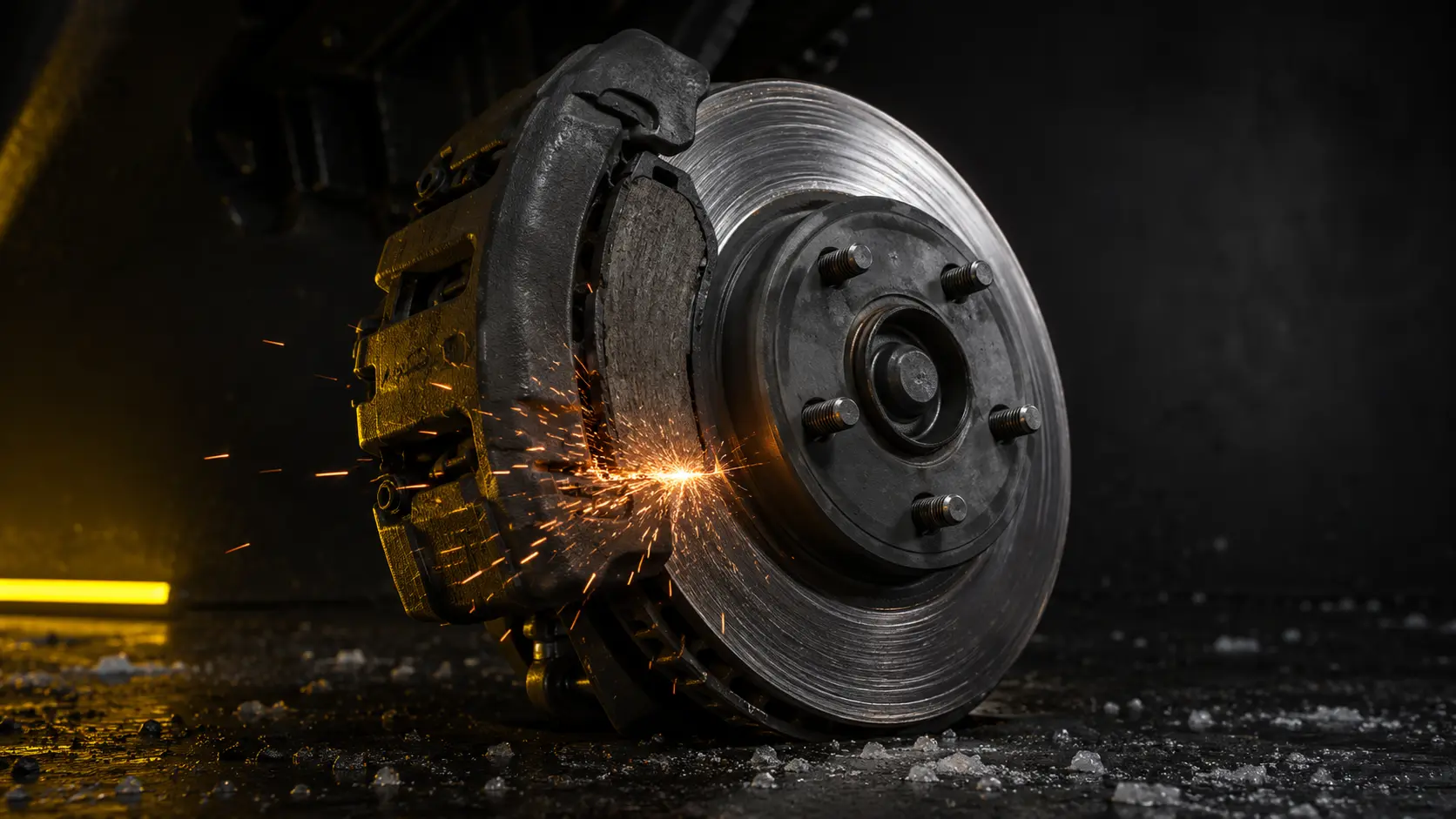
Hearing a grinding noise when you press the brake pedal is not something to ignore. Sometimes moisture can cause harmless surface rust that makes noise during the first few stops. Grinding that continues, however, may mean a brake pad is worn down or another part of the braking system is not working correctly.
Here is what Peoria drivers should know—and when it is safer to stop driving.
Why are my brakes grinding?
Several problems can cause a grinding or scraping sound. The sound alone cannot confirm which part has failed, but these are some of the most common possibilities.
Worn brake pads
Brake pads contain friction material that presses against the rotors to slow your vehicle. Once that material wears away, the metal backing of the pad can contact the rotor.
Continuing to drive can damage the rotor and turn a brake-pad replacement into a larger repair.
Surface rust after rain or snow
A thin layer of rust can develop on brake rotors after a vehicle sits in rain, snow, or humid weather. This can cause scraping during the first few stops.
The noise should normally disappear as the brake pads clean the rotor surface. If it continues, becomes louder, or affects braking, the vehicle should be inspected.
A sticking caliper or slide pins
The brake caliper must move correctly so the pads can apply and release evenly. Rust, damaged hardware, or slide pins that are not moving freely can cause a pad to remain against the rotor.
Possible warning signs include:
- One wheel becoming unusually hot
- A burning smell after driving
- The vehicle pulling while braking
- One brake pad wearing faster than the other
- Grinding that seems to come from one wheel
If you suspect a brake is overheating, stop somewhere safe and allow it to cool. The wheel, rotor, and caliper may be hot enough to cause a burn.
Damaged rotors or brake hardware
Deep rotor grooves, loose hardware, or damaged components can also create grinding or scraping noises. The correct repair depends on what is found during the inspection.
Can I keep driving with grinding brakes?
Persistent grinding should be inspected as soon as possible. Even when the vehicle still stops, the braking system may be wearing rapidly or overheating.
Stop driving and arrange safer transportation or towing if:
- The brake pedal feels soft or sinks toward the floor
- The vehicle takes longer than normal to stop
- It pulls sharply when braking
- A red brake warning light comes on
- You smell something burning
- A wheel becomes extremely hot
- You hear heavy metal-on-metal grinding
Driving farther can increase the damage and may reduce your ability to stop safely.
Why Peoria vehicles need brake inspections
Vehicles in Peoria deal with rain, snow, road salt, winter moisture, and major temperature changes. These conditions can contribute to corrosion around rotors, calipers, slide pins, brake hoses, and mounting hardware.
That does not mean every noise requires a complete brake replacement. A proper inspection should identify which components are worn or damaged before parts are purchased.
What should be checked?
A brake inspection may include checking:
- Remaining brake-pad material
- Rotor condition and thickness
- Caliper movement
- Slide pins and brake hardware
- Brake hoses and visible leaks
- Uneven wear between the wheels
- Signs of overheating
The goal is to find the actual cause instead of replacing parts based only on the sound.
When the cause is unclear, start with a brake inspection in Peoria. If worn pads are confirmed, review JL's brake pad replacement service and published labor price.
If the sound appears mainly after rain or an overnight sit and then fades, compare the pattern in JL's guide to brakes squeaking after rain in Peoria. If the noise is a steady hum or growl that follows road speed even when you are not braking, compare the signs of wheel-bearing noise versus tire or brake noise before choosing parts.
Frequently asked questions
Can surface rust make brakes grind?
Yes. Light surface rust can make a scraping sound after a vehicle has been sitting in wet weather. It should clear after a few normal stops. Noise that stays or gets worse needs an inspection.
Does grinding always mean I need rotors?
No. Rotor replacement depends on their condition, thickness, and the cause of the noise. An inspection is the best way to determine what is actually needed.
What information should I send for a brake quote?
Send the vehicle's year, make, model, brake symptoms, and ZIP code. A VIN is helpful when you want parts included in the quote.
Brake service in Peoria, Illinois
JL Brake Service handles brake pads, rotors, calipers, hoses, bleeding, and select wheel-bearing or light-suspension repairs in the Peoria area.
If your brakes are grinding, squeaking, shaking, or not feeling right, call or text 309-215-1599 with your vehicle's year, make, and model. We can discuss the symptoms and determine the next step before scheduling service.
Text for a quote