If the wet area really is brake fluid, keep the vehicle parked until the leak source and fluid loss are checked. Near a wheel, the source may be the flexible brake hose or its connection, the caliper or bleeder screw, or a nearby rigid metal brake line. A photo can help plan the visit, but the location of the wet spot alone does not identify the failed part.
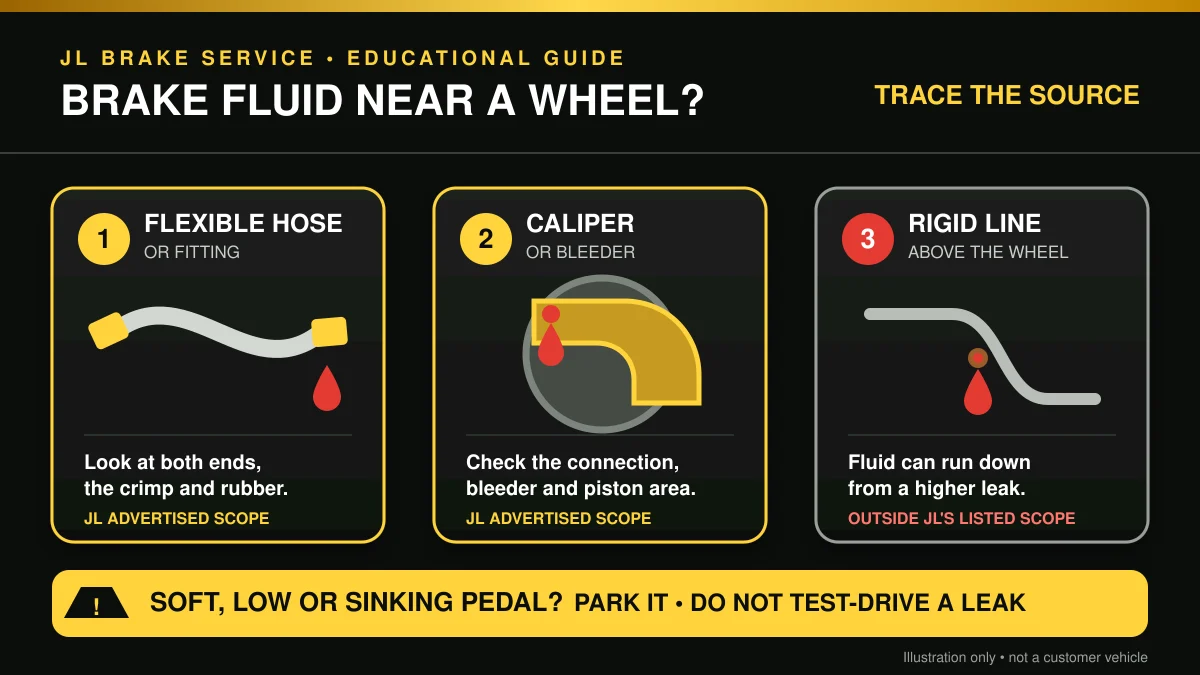
What can leak near a wheel?
Flexible hose or fitting
Fluid may appear on the rubber hose, at a crimp, or where the hose joins the caliper or metal line.
Caliper or bleeder
Wetness can start around the piston seal, hose connection, bleeder screw, or caliper body.
Rigid metal line
Corrosion or damage can leak above the hose and run downward. JL does not advertise hard-line fabrication.
When should the vehicle stay parked?
Keep it parked and arrange safer transportation or towing if the brake pedal feels soft, low, or slowly sinks; the red brake warning light is on with a pedal change; fluid is actively dripping; or the vehicle is not stopping normally. Manufacturer guidance published through NHTSA warns that low brake fluid or a hydraulic fault can increase stopping distance, and Toyota tells drivers to stop safely when the red brake-system warning indicates low fluid or a malfunction.
Braking may change as more fluid escapes. Do not crawl under a vehicle supported only by a jack, and keep brake fluid away from painted surfaces and skin.
How do you tell where the fluid started?
The useful inspection is not “which part looks wet?” It is “where is the highest fresh wet point?” Fluid can travel along a hose, bracket, splash shield, suspension part, or wheel before reaching the ground. The hose, both connections, caliper, bleeder, and visible rigid line need to be compared. The reservoir level, pedal feel, warning lights, and work history also matter.
Not every liquid by a wheel is brake fluid. Water, axle grease, shock or strut oil, and other fluids can land in the same area. Do not taste or deliberately touch an unknown fluid. Send clear photos of the wheel area and the ground, then describe the pedal and warning lights.
Why Peoria winter conditions matter
IDOT says Illinois winter operations use rock salt and liquid chemicals including salt brine. Wet road spray and repeated freeze-thaw exposure can leave brake hardware, fittings, hoses, and underbody lines in a harsh environment. ADVICS recommends checking for leaking, cracked, or damaged hoses and looking for underbody corrosion during winter brake inspections.
That context does not prove road salt caused a particular leak. It explains why a Peoria-area vehicle with wetness near a wheel needs a complete look at the connection points and nearby line—not an automatic hose or caliper guess.
Where JL Brake Service fits
JL's current advertised hydraulic-brake work includes flexible brake hose replacement and brake caliper repair or replacement for qualifying Peoria-area mobile appointments. Standard bleeding and normal brake fluid are included with those listed services. Replacement parts and applicable tax are separate.
| Confirmed service | Labor + local mobile visit |
|---|---|
| One flexible brake hose | $190 |
| Same-axle hose pair | $300 |
| One brake caliper | $220 |
| Same-axle caliper pair | $360 |
The $40 upfront payment reserves an accepted appointment and counts toward the approved total. It is not added on top of these menu prices. The vehicle, leak source, parts, work area, and final quote must be confirmed first.
Hard brake-line fabrication is not on JL's advertised service menu. If the wetness traces to a rigid metal line, Jimmy can explain that the job is outside the listed scope instead of selling a hose or caliper that does not address the source.
What should you send for a useful first look?
- Year, make, model, and VIN or license plate.
- Which wheel appears wet: front or rear, driver or passenger side.
- Whether the pedal is normal, soft, low, or sinking.
- Any red brake or ABS warning light.
- Photos of the inside of the wheel, hose area, and spot on the ground—without crawling under the vehicle.
- Your ZIP code and whether the parked vehicle has a flat, safe, off-street work area.
If the main symptom is a pedal change rather than visible fluid, read the soft brake pedal safety guide. If one wheel is hot or dragging, compare the caliper-versus-hose guide. For an uncertain concern, start with the brake concern review.
Brake fluid leak questions
Can I drive with brake fluid leaking near a wheel?
Do not drive if the pedal is soft, low, sinking, a red brake warning appears with a braking change, fluid is actively leaking, or stopping is not normal. Keep the vehicle parked and arrange towing or safer transportation.
Does fluid near the wheel always mean the brake hose is bad?
No. The source may be a hose or connection, a caliper or bleeder, a rigid line, or a different vehicle fluid. The wet spot must be traced before ordering a part.
Does JL replace rusted metal brake lines?
No. JL's advertised scope covers flexible brake hoses and calipers, not routine hard-line fabrication.
See fluid near a wheel?
Keep the vehicle parked if braking has changed. Call or text Jimmy at 309-215-1599 with the vehicle, wheel location, pedal feel, photos, and ZIP.
Sources and scope: NHTSA-hosted manufacturer brake warning guidance; Toyota brake-system warning guidance; ADVICS brake inspection checklist; ADVICS winter brake checklist; IDOT Road Salting 101; and JL's current service menu. Reviewed November 3, 2026.